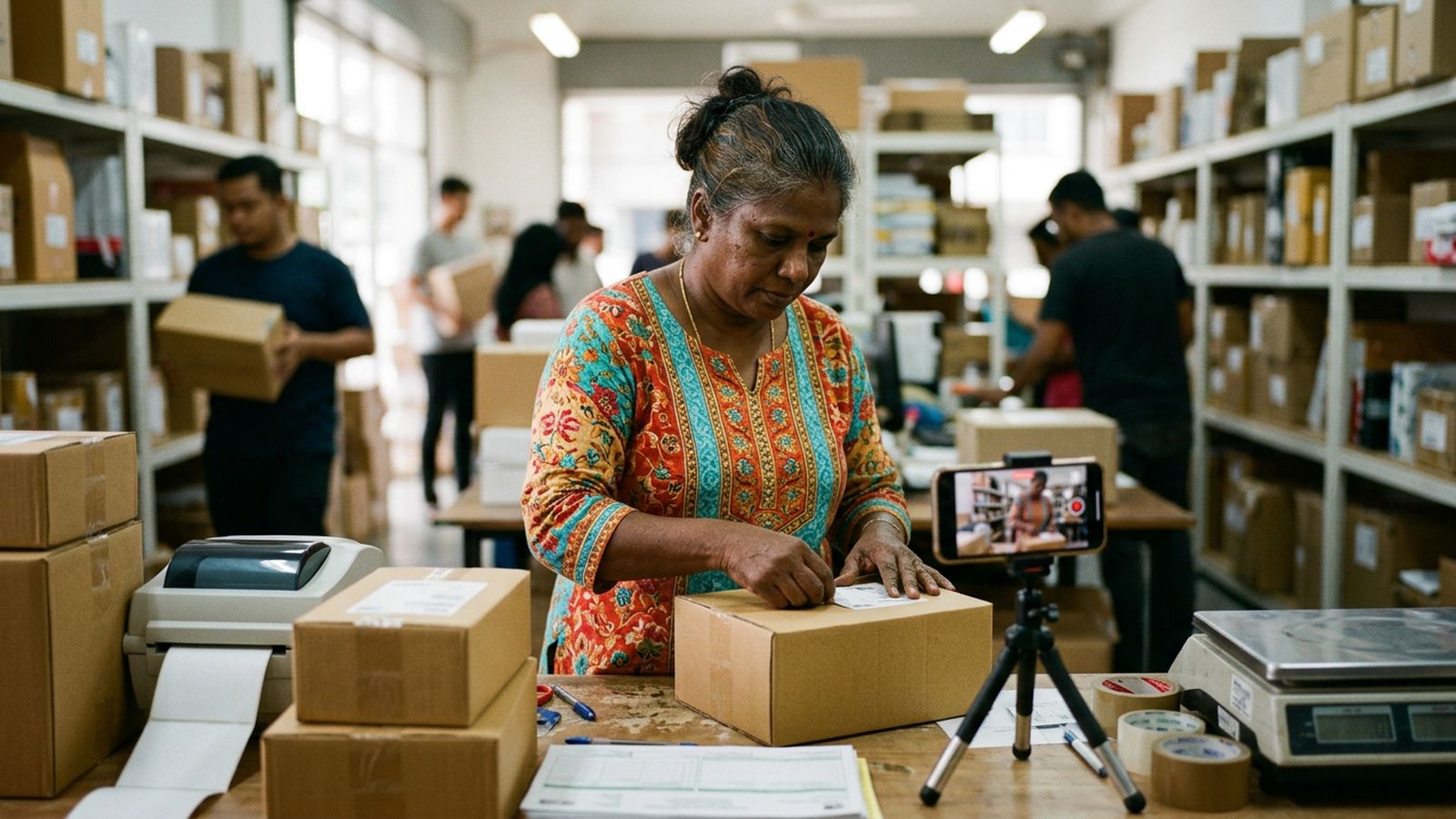
Every order. On video. Dispute-proof.
A seller sees something wrong with an order and wants to cancel before it ships. The first question is almost never legal, it is practical: can I, without wrecking my shop?
Here is the honest answer for Malaysian marketplace sellers: yes, you can cancel before shipping in certain situations, but every marketplace treats cancellation differently, and the way you cancel matters more than the fact of cancelling.
When cancellation is clearly allowed
You are generally on firm ground when the order itself is broken:
- The buyer’s delivery details cannot be completed by the courier.
- The address is outside the marketplace’s supported delivery area.
- The item is out of stock and cannot be fulfilled.
- The buyer asks you to cancel (for COD orders, they may simply not answer the courier).
These are not judgement calls about the buyer, they are objective problems with fulfilment. Platforms expect you to cancel those.
When cancellation gets dangerous
Cancellation becomes risky when it looks like you are refusing to serve a buyer. High cancellation rates hurt your metrics across every major Malaysian platform:
- Shopee tracks cancellation rate as part of seller health; repeated cancellations can limit your account.
- TikTok Shop uses order defect and fulfilment metrics that affect visibility and seller level.
- Lazada similarly weighs cancellations and late fulfilment in its performance score.
A pattern of cancelling orders that look risky, without a documented reason, reads as seller behaviour, not buyer behaviour. And some buyers report sellers who cancel for weak reasons, which adds another complaint to your record.
The smarter question: verify before you cancel
Before you cancel, ask what you can verify:
- Is the reason objective? Address incomplete, item unavailable, delivery impossible, document it.
- Can you reach the buyer? A quick message often fixes a bad address. Many “risky” orders are just sloppy ones.
- Do you have a record? If you ship, your packing video is your record. If you cancel, keep screenshots of the reason and the conversation.
The discipline of verification is exactly why Packory is building Buyer Check, a coming-soon tool that gives you a risk score based on signals you share, instead of asking you to guess. No labels, no names, just a clearer reason to pause, verify, and decide.
What protects you more than cancelling
Here is the uncomfortable truth: cancellation protects you from one order, but it does nothing for the orders you cannot see coming. The sellers who survive dispute-heavy periods are not the ones who cancel the most, they are the ones with the strongest records.
A packing video that shows the item going into the parcel, sealed and labelled, with a timestamp you can prove:
- Shortens “item not received” battles.
- Answers “the box arrived empty” with footage instead of words.
- Keeps you calm when a buyer’s story changes mid-claim.
And because the record belongs to you (stored in your own cloud), you are never locked into a platform’s archive to defend yourself.
The difference between refusing and protecting
Marketplaces notice patterns, and so do buyers. If every cancellation you make happens right after a buyer asks a specific question, your shop starts to look like it is avoiding customers, and that reputation travels. The better frame is protection, not refusal: you protect your margin by verifying fulfilment problems, and you protect your standing by keeping cancellations rare, documented, and objective. When a genuine problem order appears, cancel it cleanly and move on; when a normal order merely makes you nervous, that nervousness is a signal to record better, not to refuse. Sellers who internalise this difference keep their cancellation rates low while still walking away from the orders that genuinely cannot be fulfilled, and they never have to explain a pattern of “gut feeling” cancellations to a platform officer.
If you do cancel: keep the paper trail
Decide to cancel? Treat it like a mini case file:
- Screenshot the order page showing the reason (address error, out of stock, buyer request).
- Save the chat where you asked the buyer to clarify.
- Note the time and date of the cancellation.
This protects you twice: if the platform asks why you cancelled, you have an answer; and if the buyer later re-orders or leaves feedback, you have context. Most sellers who get burned by cancellations are not burned by the cancellation itself, they are burned by having no record of why they did it.
Start with the record
Before you decide your cancellation policy, build the habit that makes most disputes boring:
And if you want early access to Buyer Check, join the waitlist, a score you can act on, with evidence behind it, coming soon.