Every order. On video. Dispute-proof.
Some orders feel wrong before they ship. The username is a day old, the chat replies are pushy, the address looks off, and the amount is just large enough to hurt if it goes wrong. Most sellers ignore the feeling because they think they cannot do anything about it.
You can do something, but only if you check the right things. “How to check a buyer on Shopee Malaysia” is one of the most useful questions a seller can ask, because the answer separates real risk signals from paranoia.
What a check is, and what it is not
A buyer check is not a name-and-shame list, and it is not a guarantee that an order will go smoothly. Honest checks look at patterns a seller can actually see: account age and history, communication style, order behaviour, and delivery details.
What you cannot do is declare someone a scammer on a hunch. Platforms punish sellers who cancel orders without a defensible reason, and one wrong accusation can cost more than one risky shipment. The point of a check is to give you a reason to look closer, not a license to refuse everyone who seems new.
Signals on the Shopee order page
Start with what Shopee itself shows before you pack:
- Account age and rating. A very new account with zero history is not proof of anything, every seller was once new too. But a new account with a high-value order and an unusual address deserves an extra look.
- Order and cancellation history. Buyers with repeated cancellations or frequent returns appear in patterns over time. Look at the ratio: occasional returns are normal; systematic returns after delivery are not.
- Chat tone and pressure. Urgency is a real sales dynamic, but pressure aimed at making you ship before you can verify details is different. “Ship now, I will fix the address later” is not a reasonable request.
- Address and recipient details. An address that cannot be completed by the courier, or a recipient name that does not match the account, is a flag, not because it is suspicious by itself, but because it is the kind of detail a legitimate buyer usually gets right.
Signals from the delivery itself
Some red flags only appear after you hand the parcel to the courier:
- Proof-of-delivery photos that do not match the address.
- “Item not received” claims on orders that show delivered status.
- Return requests where the item arrives damaged after the buyer asked specific questions about the packaging.
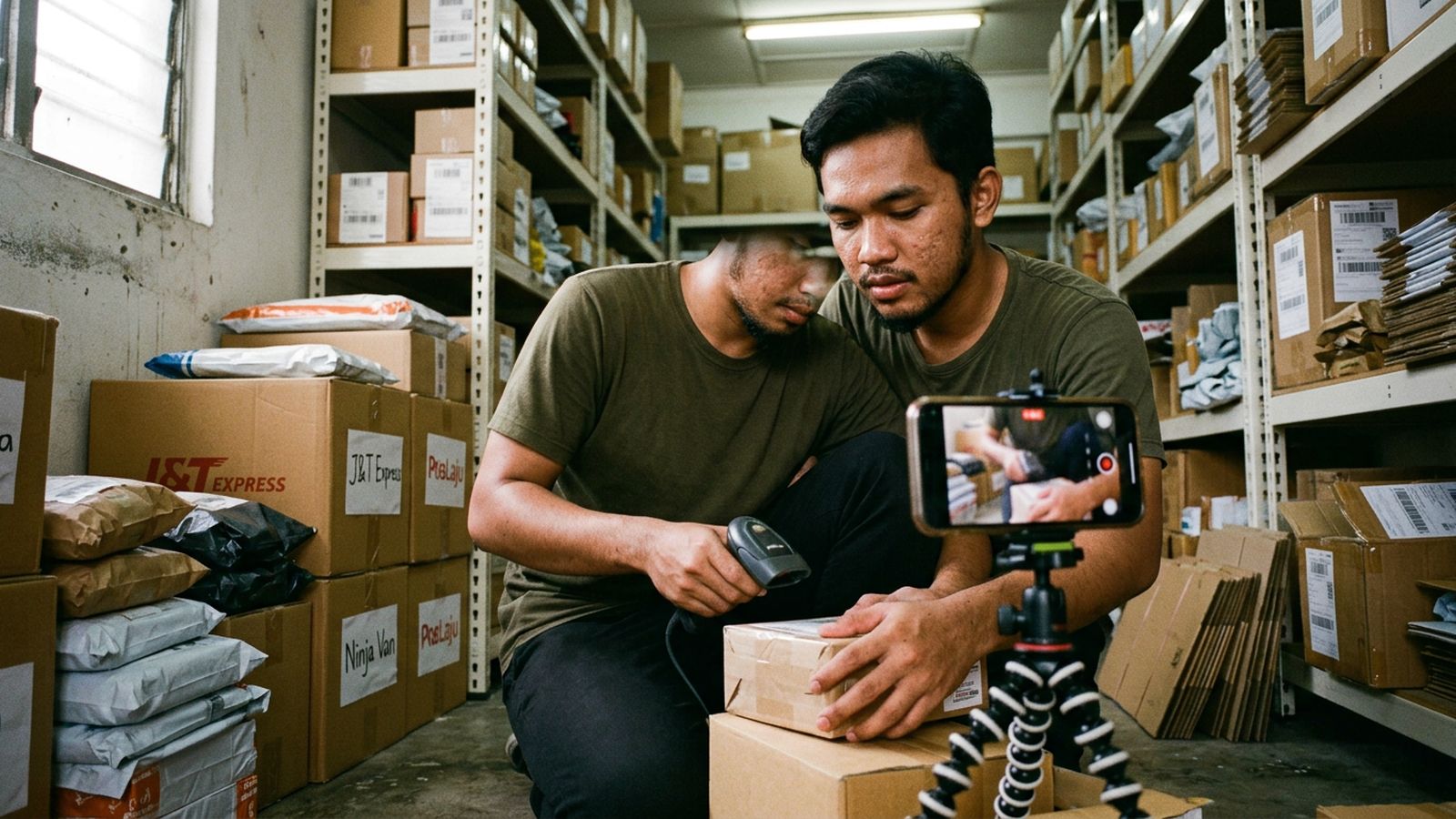
These are exactly the cases where video proof of what you packed matters. A timestamped clip showing the item inside the parcel, sealed and handed over, gives you and the platform something objective to compare against the buyer’s claim.
What an honest tool would do
This is why Packory is building Buyer Check, a coming-soon check that looks for risk patterns, not labels. The output is a score you can act on, and it only works when there is evidence behind it: shared order signals, verified against the same proof-first standard Packory uses for packing video.
No names. No accusations. A score, plus the reasons behind it, so you can decide, not guess.
While you wait, the single most powerful habit is the one you control today: record the packing. When a claim lands, a video of the item going into the parcel is the difference between a he-said-she-said argument and a record the platform can actually use.
The limits of checking
Remember what a buyer check cannot do:
- It cannot predict every fraud.
- It cannot replace marketplace rules and your own judgement.
- It should never be used to discriminate against honest new buyers.
Fraudsters adapt. That is why the strongest protection is layered: check what you can, pack with proof, and keep records until the transaction window closes.
A simple pre-ship checklist
Before you pack any order that feels off, run a 60-second check:
- Account, how old is it, and what does its history show?
- Order, does the value match the account’s usual pattern?
- Address, complete, deliverable, matching the recipient on record?
- Chat, any pressure to ship before verifying details?
- Your record, will you be able to prove what was inside this parcel?
If any box feels uncertain, do not cancel immediately. Message the buyer, verify the detail, and keep the conversation saved. If the order ships anyway, make sure the packing clip for that order is the cleanest one you record all week, because that is the one most likely to be questioned later.
Start with proof
You can start protecting orders today without waiting for Buyer Check. Packory’s free plan records hands-free packing video, files each clip under its order, and gives you a proof link you can send when a claim appears.
And if you want early access to Buyer Check, join the waitlist, we will tell you the moment it is live.