Every order. On video. Dispute-proof.
Knowing how to pack a parcel for shipping in Malaysia is not just about making the box look tidy. A pack done properly protects the item through a courier network, keeps the parcel from arriving dented or opened, and gives you something solid to point at when a buyer says the order arrived damaged, short, or empty. Most claims start the same way: a box that was never strong enough, or a pack that nobody recorded. This guide covers the materials Malaysian sellers actually use, the order of steps, and the habits that stop a return from turning into a loss.
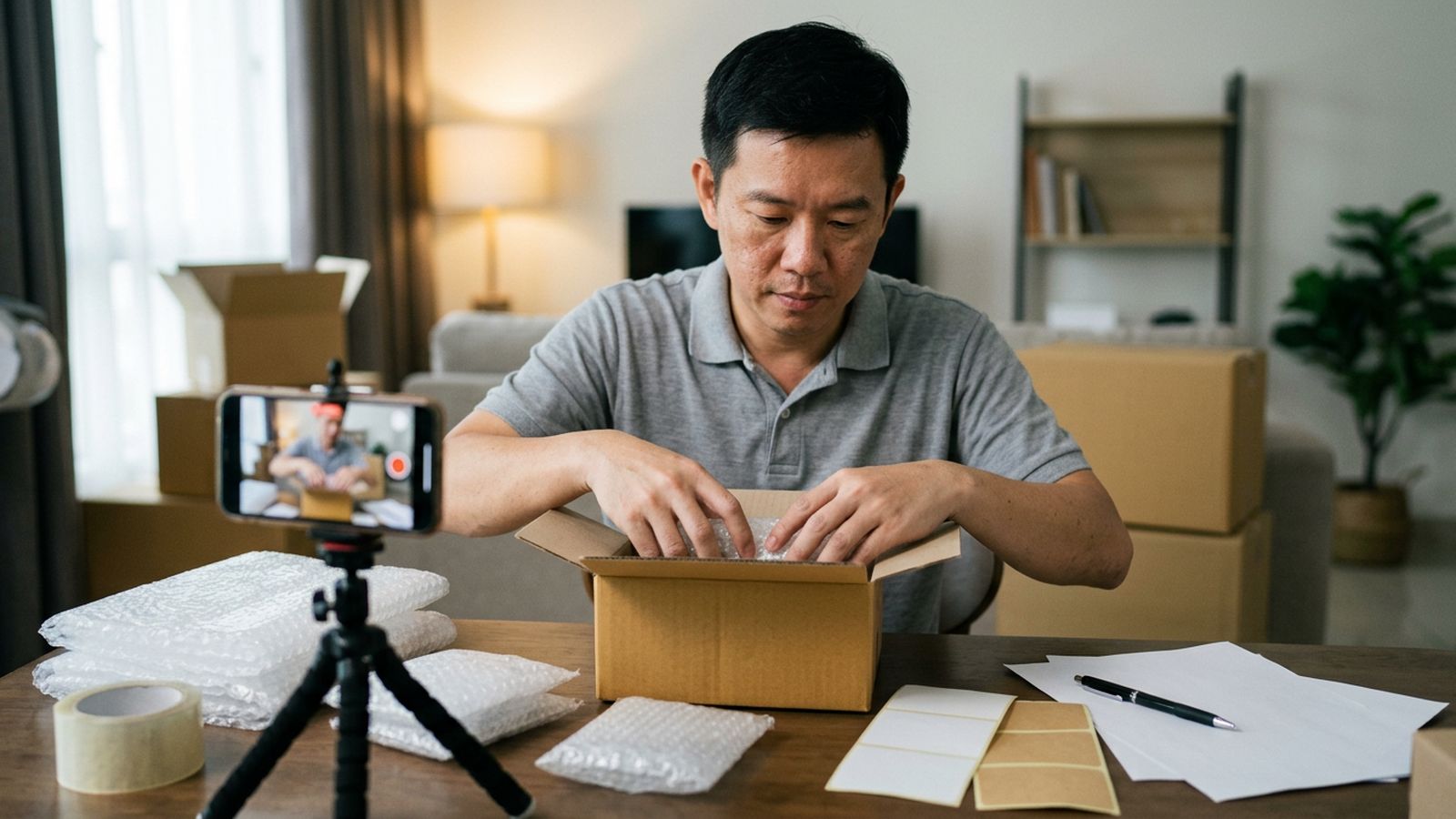
A parcel gets judged at three points, when it leaves your table, when it moves through the sorting centre, and when it reaches the buyer. You control the first point.
Before you pack: materials that hold
- A rigid brown cardboard box sized close to the item. Boxes that are too big let contents slide and crush on impact.
- Bubble wrap, foam sheets, or crumpled paper for cushioning. Aim for a finger width of padding on every side.
- Strong packing tape, the pressure sensitive kind, not stationery tape that peels in the heat.
- A waterproof pouch or clear tape for the AWB, so rain and rubbing do not erase the barcode.
- A marker for the parcel reference, and a kitchen scale if you want the weight on record.
Buy these in bulk. The cost per parcel drops, and the standard holds even when orders spike.
How to pack a parcel for shipping: the order of steps
- Check the item against the order first. Read the SKU, variant, colour, and quantity as you pick. For electronics, match the serial or IMEI to the invoice.
- Wrap the item, not the box. Two or three layers of bubble wrap on anything fragile, taped so the wrap cannot slide loose.
- Put the wrapped item in the box and fill the empty space. If it moves when you shake the box gently, it will move harder on a lorry.
- Seal with tape across the centre seam and down both side edges, an H shape. Two layers on the main seam.
- Apply the AWB on the largest flat face, away from the seal, and smooth it flat. A wrinkled or taped over barcode is the most common cause of a failed scan.
- Weigh the parcel and write the weight on the box or in your order notes.
- Hand the parcel over at the counter and keep the scan or drop off receipt.
Steps five and seven feel like admin, and they are the two that decide whether you can prove anything later.
Fragile, liquid, and high value items
Glass, ceramics, and skincare bottles need a box inside a box: item wrapped, sealed in a small carton, then that carton cushioned inside the outer box. Liquids go upright in a sealed bag, so a leak stays contained instead of soaking the label. Electronics travel better in the original box and its inserts. Small extras, like corner protectors or a fragile sticker, are worth the price on high value orders.
Whichever category you sell, check your courier’s limits for size, weight, and restricted items before you pack, because those limits differ by service.
Why the packing record matters
Packing well lowers the chance of damage. It does not prove what you packed. That is the gap a phone camera or a packing verification tool closes. A useful record is continuous and unedited: the item on the table, the item going into the box, the box being sealed, and the AWB in frame. It also carries a timestamp, because a claim can land weeks after delivery.
Then store the clip where you can find it by order number, instead of scrolling through a camera roll. When a dispute window opens you have days, not weeks, to produce evidence, and “let me search my gallery” is not a plan.
Packory exists for that habit. Scanning the AWB starts the recording, a timestamp is written into every frame, and the clip is filed under that order in your own cloud storage. When a buyer asks, you can share one clean proof link that shows the pack. The free tier covers up to 25 verified videos a month, and paid plans start at RM12.99 for 75 videos a month. For the longer version of how the record works, read what is packing verification.
If the parcel arrives damaged or empty
Do not accuse the buyer. Most damaged parcel reports are genuine, and some are mishandling somewhere between your table and their door. Reply quickly, stay factual, and attach your record: the packing clip, the AWB and order number, the weight, and the handover receipt. If the value is high enough to matter, a police report is worth filing, and the same record supports it.
Marketplaces and couriers run on evidence, so the side with the clearer record has the easier conversation. Our guide on empty box claims walks through what to prepare for that reply. It also helps to know what a failed claim really costs, which is where the fee and profit calculator earns its place: returns, reshipping, and platform fees add up fast on a thin margin.
The routine, not the rescue
Pack every order the same way, from the cheapest phone case to the biggest order of the week. Selective packing and selective recording are what get sellers into trouble, because the claim usually comes from the order you did not expect.
If you are shipping to a buyer you have never dealt with before, check the buyer first, then pack it on camera. Two minutes of routine beats two weeks of arguing.