Every order. On video. Dispute-proof.
A parcel lost in transit in Malaysia rarely arrives as one dramatic moment. It arrives as silence. The tracking stops updating, the buyer sends a message, and an order you packed correctly stops existing between your table and their doorstep. What you do in the next few days decides whether this becomes a refund you absorb or a claim that gets resolved. The problem comes in two shapes, and treating them as one is what makes it expensive.
The two shapes of a parcel lost in transit
No movement at all. The parcel was scanned once or twice, then nothing. It is stuck in a sorting centre, loaded onto the wrong van, or sitting in a branch nobody has checked.
Delivered, then denied. Tracking says delivered and the buyer says nothing arrived. That is not always dishonest. The parcel can be at the guard house, with a neighbour, in the office mailroom, or left at the gate.
Which shape you have tells you who to ask. The first is a courier trace. The second is an address conversation.
The first 24 hours: what to check, in order
- Open the full tracking history, not the status headline. Read the last scan, its location and its timestamp.
- Ask the buyer to check the usual holding spots: guard house, neighbours, family at home, the office mailroom, and any self collection point.
- Contact the courier with the AWB number and ask for a trace. Get the case reference.
- Write the timeline down: order date, handover time, last scan, the day you reported it. You will reuse it for everyone involved.
Speed matters, because these processes run on deadlines.
Who decides the claim, and what they ask for
- The courier. They work from the AWB, the handover scan and the weight. Compensation limits come from the courier’s terms of service for the service you used, so read it rather than assume your goods’ value is the ceiling.
- The marketplace. If you shipped on platform logistics, the case runs through their process. Steps and windows change, so check the current policy in your Seller Centre.
- Declared value cover. If you paid for a declaration on the parcel, that slip matters most.
Recovery is slow. A trace can take days and some parcels turn up late, so say that plainly instead of promising what you cannot control.
Evidence that decides a lost parcel case
A tracking number proves a parcel moved. It does not prove what you handed over, in what condition, or that the right item was inside.
- The handover scan or drop off receipt, with the date and time visible.
- The weight, if the courier receipt prints it.
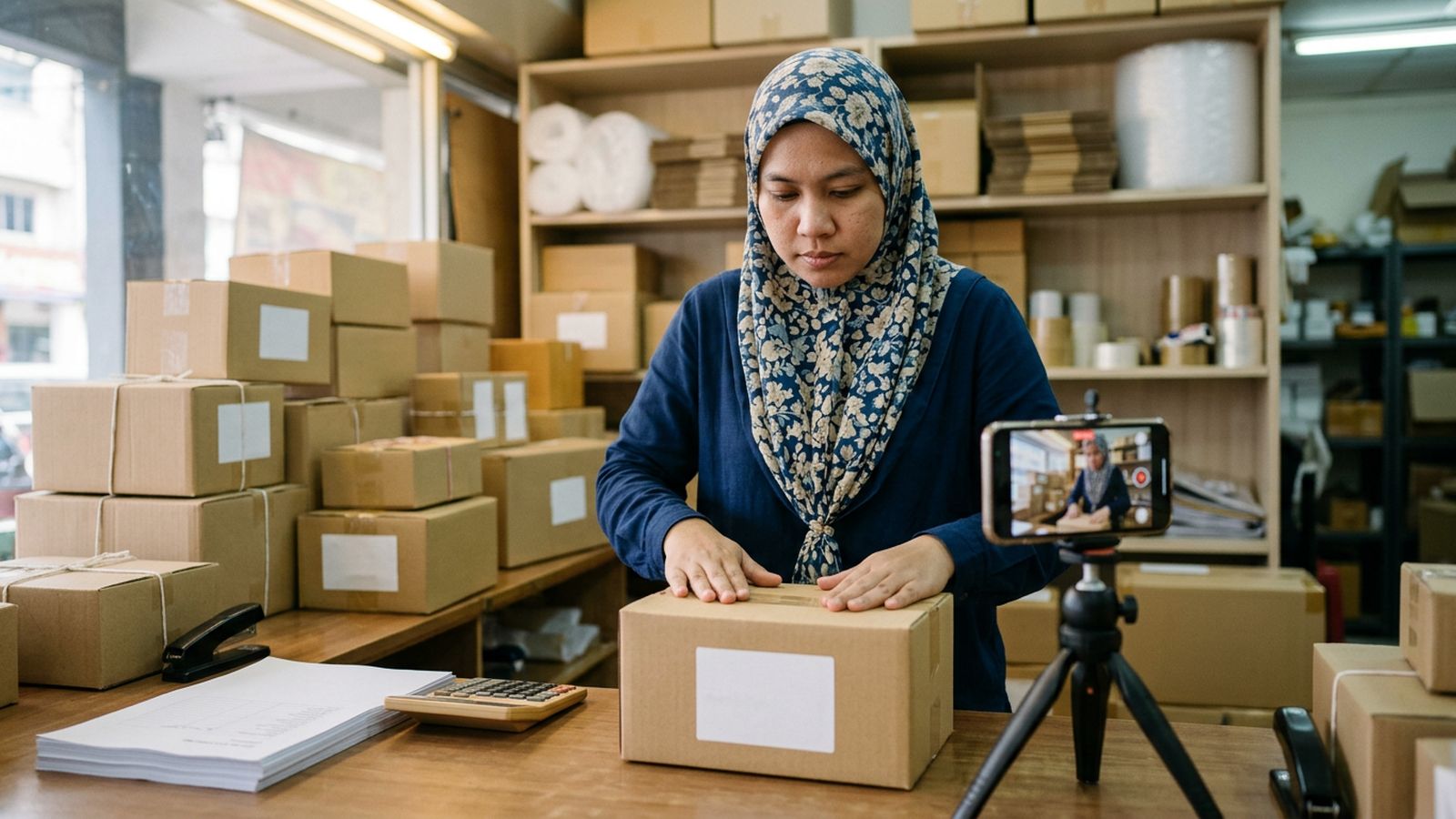
- A packing clip tied to the AWB, with the item, the seal and the label in one continuous video.
- The chat trail with the buyer, kept inside the platform.
- The case reference from the courier and from the platform.
Keep these searchable by order number, not by date. A claim opens on a deadline, and a camera roll is not a plan. The same stack settles empty box and wrong item claims, and our guide on proof of shipment walks through each part.
What to tell the buyer while the trace runs
Reply quickly, stay factual, do not accuse anyone. Most loss reports are genuine, and parcels can vanish in a sorting centre. Give the buyer the case reference and a realistic date for the next update, then update on that date even if nothing has moved. Seller silence is what turns a lost parcel into a bad review. If you refund or resend, decide from your own terms and margin, not from pressure. A missing order costs more than the refund, so run the numbers through the fee and profit calculator before you promise a free replacement.
Where a packing record changes the outcome
A packing clip does not make a parcel reappear. It takes you out of the guesswork. When the question is what was inside the parcel, the clip answers it. When the argument is with the courier, the clip and the handover scan show the parcel left your hands sealed and complete.
Packory is built for that habit. Scanning the AWB starts the recording, a timestamp is written into every frame, and the clip is filed under that order in your own cloud storage. You share one clean proof link with the buyer yourself, in WhatsApp or the platform chat. The free tier covers up to 25 verified orders a month. For the longer version, read what is packing verification.
How to keep the next parcel from going quiet
- Hand over at the counter and watch the scan register. A drop box gives no scan and no weight.
- Apply the label flat and away from the seal, and check the address against the order as you stick it.
- Consider declared value cover on high value orders, and know the cost before you need it.
- Record every order, not only the risky ones. Parcels rarely vanish on the order you were suspicious about.
- Watch your own pattern. Losses clustering on one courier or drop off point are worth raising, with records attached.
- Check unfamiliar buyers before shipping a high value order. A quick buyer check takes a minute.
A lost parcel is a process problem more often than a fraud problem. Treat it that way and you spend the week sending documents, not arguing.
Every order. On video. Dispute-proof. A clear record does not stop every parcel from going missing, it means the argument never starts with you. Packory is the evidence layer for Malaysian e-commerce, start free and make every order provable from the moment it leaves your hands.