Proof of shipment is the record that shows what left your hands, when it left, and in what condition. A tracking number proves a parcel moved. It does not prove what was inside the parcel, and that gap is where most seller disputes are lost.
This is not about expecting the worst from buyers. It is about removing ambiguity from an order before anyone has to argue about it. Here is the evidence stack that holds up, and the parts sellers usually skip.
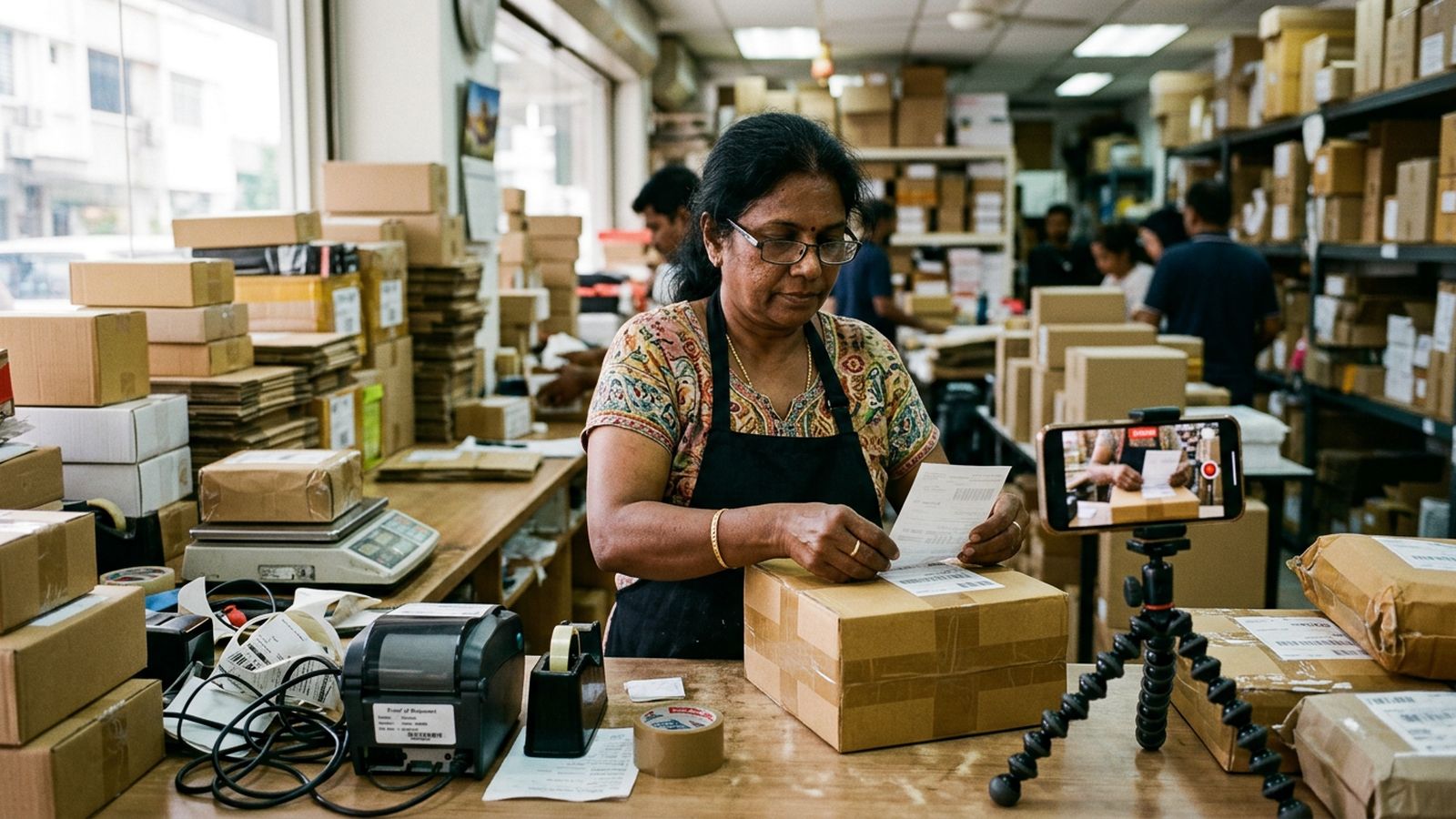
What a dispute team actually looks at
When a claim lands, whoever decides it works from records, not from tone. In practice those records are:
- Tracking events. The parcel’s journey, scanned at each handover point.
- The packing record. Whatever exists showing the item going into the parcel.
- The chat trail. What was agreed with the buyer, and when.
- Time consistency. Whether the dates and times line up with each other.
Your job is to make those four agree. When they agree, the conversation gets short. When they disagree, the seller usually carries the cost.
Proof cuts both ways
Proof of shipment is not only a shield for the seller. A buyer who receives a wrong or damaged item benefits from the same record, because the clip shows what left the shelf and settles the question without a week of back and forth. That is why the strongest version of this is two sided: the clip is stored once, and either party can be pointed to it.
The five part evidence stack
1. The tracking record, matched to the order
Keep the tracking number and the order number in one place, not one in your phone and the other in a marketplace dashboard. The moment they are separate, a claim becomes a search.
2. A packing clip tied to that tracking number
This is the part most sellers do not have. A video of the item being packed is only useful if it can be connected to the order it belongs to. That connection is what turns a video into evidence.
The practical version: scan the tracking number or airway bill first, pack with the item in frame, seal it, and end on the same label. The label appears at the start and at the end, so the clip belongs to one parcel and no other.
3. Weight or dimension, if you have it
Courier receipts with weight or dimensions give a second, independent record. They are not always available, especially on marketplace arranged shipping, but when you have them, keep them with the order.
4. The chat trail
Keep buyer conversations inside the platform wherever possible. A platform message is a record. A deleted WhatsApp thread is not.
5. Storage you control
Evidence that lives only in a phone gallery disappears with the phone, and gets overwritten by the next thousand photos. Clips need to be stored somewhere searchable by order, months later, when a dispute actually opens.
Why hand recording your packing fails
Plenty of sellers film an order by hand, usually the one that felt off. That is instinct, not a system. It fails in predictable places:
- Discipline. You record the order you are worried about and forget the rest. The claim that arrives is always on an order you did not film.
- Connection. A clip with no label in frame cannot be tied to a specific parcel when there are fifty parcels a week.
- Timestamp. File metadata can be questioned. A timestamp burned into the frame itself cannot be separated from the video.
- Hands free. Stopping to start and stop a recording slows the packing line, so the habit dies within a week.
- Storage. Clips sit in a camera roll, impossible to find by order number later.
A short checklist you can run today
- Every parcel gets a clip, not just the suspicious ones.
- The tracking label appears at the start and the end of each clip.
- The item is visible in frame while it is packed and sealed.
- Clips are stored where you can search by order number, not by date.
- Chat stays inside the platform.
- When a claim arrives, you reply with the record, not with an argument.
Six rules, and most sellers can put them in place this week.
What this changes when a claim arrives
A claim is a deadline, not a debate. If the record exists, your reply is one message with one link, and the decision is quick. If the record does not exist, the same claim becomes a negotiation you usually lose, and you pay for a parcel you packed correctly.
That difference is the whole point of treating evidence as part of shipping, rather than something you assemble after something goes wrong.
Packory records the packing of every order on video, links each clip to its tracking number, and keeps the record searchable by order when a dispute opens. Free to start, no credit card needed.
See how packing verification works, check a buyer before you ship, or run your own numbers with the free fee calculator.