Every order. On video. Dispute-proof.
Every returned parcel carries a bill, and the Shopee return shipping fee question comes down to one thing: the reason on the case decides who pays it.
Read the reason first, then read the fee line on the order itself, before you accept or contest anything. Here is what the fee contains, when it is not charged to you, and what changes on 1 October 2026.
Shopee return shipping fee: who pays what
Shopee treats a refunded or returned order as an unsuccessful order, and charges an unsuccessful order fee on it. The fee has two parts, and both are deducted automatically from your payout when the buyer is refunded.
- Forward Shipping Fee (FSF). The delivery leg, calculated as the actual shipping fee minus any shipping fee rebate from Shopee, rounded up to two decimal places.
- Return Shipping Fee (RSF). The return leg, rounded up to two decimal places.
You can find the deducted line in Seller Centre under My Sales, then Order Details, or in the app under My Shop, then My Income, then Released.
When the return is not your fault, the path to recovering the money is a dispute with valid evidence.
When you are not charged
Two exclusions cover most ordinary cases.
Non-Receipt. If the buyer claims the parcel never arrived, Shopee does not charge the FSF or the RSF, because the reason sits outside your control. For orders shipped through Shopee Supported Logistics, Shopee investigates the status itself. For other couriers, you may be asked for proof of shipment.
No physical return, or a reason outside your control. For the RSF, if the item is not physically sent back, or the reason is outside your control, the fee is not charged to you.
Everything else follows the reason selected and the evidence both sides submit.
What changes on 1 October 2026
Shopee has announced that from 1 October 2026, manual reverse shipping fee claims for two return reasons, Return in Original condition (RIOC) and In Transit Return Refund (ITRR), will be discontinued. Claims for eligible seller-borne shipping fees move to the Seller Shipping Fee Saver Programme, or SSFS.
The programme charges a flat fee per order and removes the manual claim step, because eligible forward and reverse shipping fees are handled automatically and the savings show up when the escrow is released. The published rates are RM0.28 per order, revised on 1 March 2026, and RM0.18 per order for Preferred Sellers from 1 April 2026.
The free trial is still open. Sign-up runs from 1 to 28 September 2026 and the trial covers 1 to 31 October 2026 at no cost, so the month you would otherwise spend filing manual claims is handled while you decide.
One condition matters: only selected sellers are eligible. Check Seller Centre, then Campaign, to see whether the programme is offered to your shop. If it is not listed, the usual reasons are a digital or non-returnable catalogue, an ongoing shop issue, or a cross-border account.
For the longer comparison between the programme and the old claim path, our breakdown of Shopee shipping fee claims versus packing evidence walks through it.
Buyer quotas are the other half of the rule
Return abuse is priced too. Shopee gives each buyer a monthly quota of free RIOC returns per seller. Once a buyer goes past that quota, the buyer carries the Return Shipping Fee, and the return can still be submitted. There is a separate monthly quota of five In-transit Return and Refund requests per buyer, after which the option is no longer shown until the month resets.
The policy does not cover returns caused by product or delivery issues. For damaged, incorrect, or missing items, the seller continues to carry the return shipping fee under the Return and Refund Policy, so a quota is not a shield for a genuinely bad pack.
What a dispute needs to win
The dispute window is short, and it is measured from the parcel, not from your mood.
- Raise the dispute in Seller Centre within three days after the return shipping period ends.
- If the return parcel reaches you inside the grey-out period, raise it within two days of receiving the parcel.
- If the item comes back damaged, used, or replaced with something else, raise the dispute within two calendar days of receiving that parcel.
- If the buyer was refunded without sending anything back, the dispute can be raised immediately.
Shopee’s own wording is why this matters: for certain cases the buyer is refunded first, and the seller can dispute with valid evidence. If the evidence is valid, the shop is compensated even though the refund already went out.
The refund is not the end of the story. Two shops with the same case finish differently based on what each one can show.
The clip answers the fee question faster than a chat
A dispute is an evidence exercise, so the question is whether you can pull a record for that order on the day the claim lands.
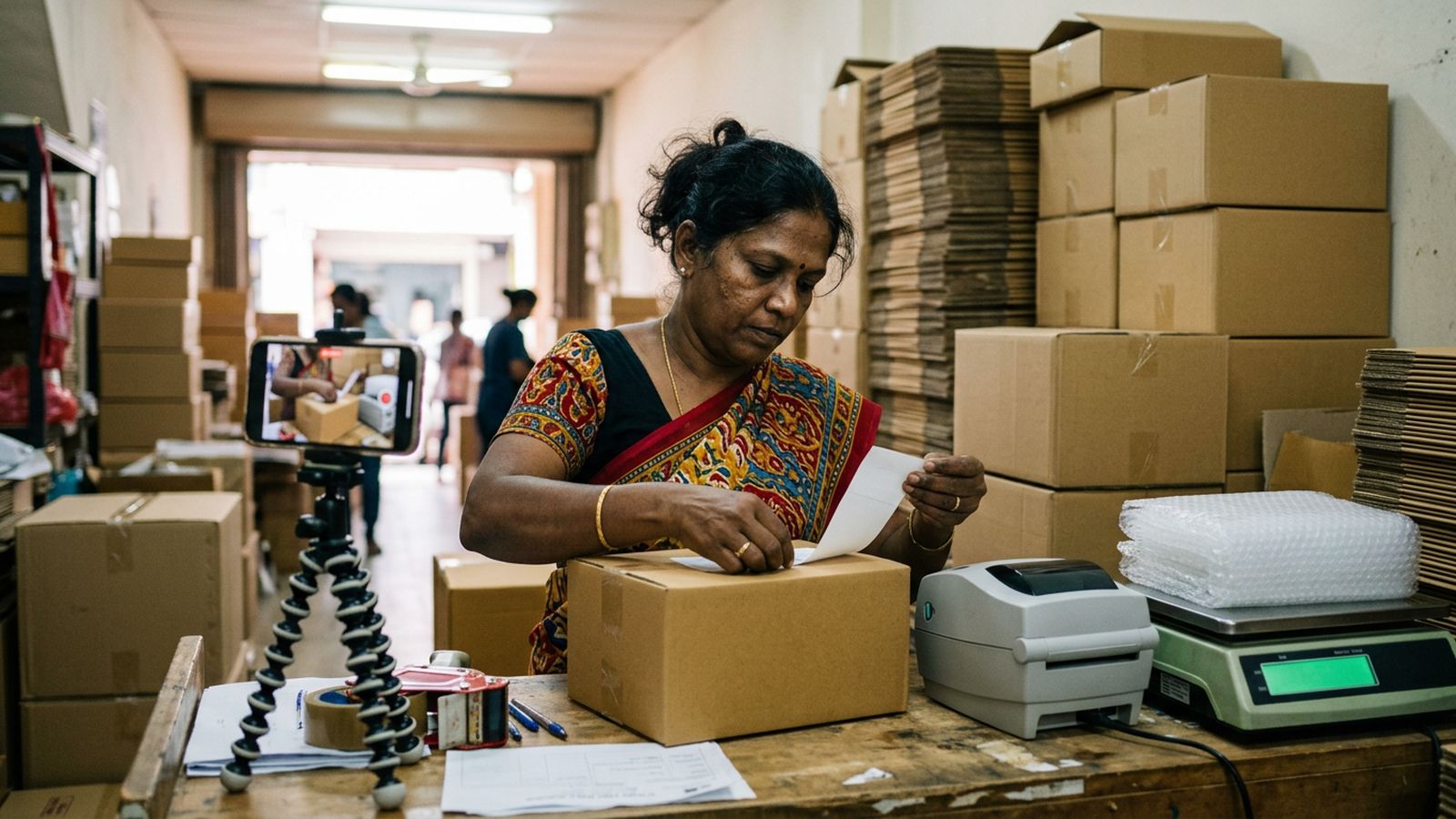
Packory was built for that habit. Scanning the AWB starts the recording, a timestamp is written into every frame, and the clip is filed under that order in your own cloud storage. When a case opens you find the clip by order number and send the buyer a clean proof link yourself, in one tap.
Packing every order the same way, including the cheap ones, is what makes that possible. The routine is described in the packing and shipping guide and in what packing verification actually is. If you are weighing a return against your margin, the fee and profit calculator puts the platform fees side by side with your own numbers.
The free tier covers a monthly allowance of verified orders, and paid plans start at RM12.99 a month.
Returns are a cost of selling. Unanswered claims are a choice. Start free and put every order on the record.